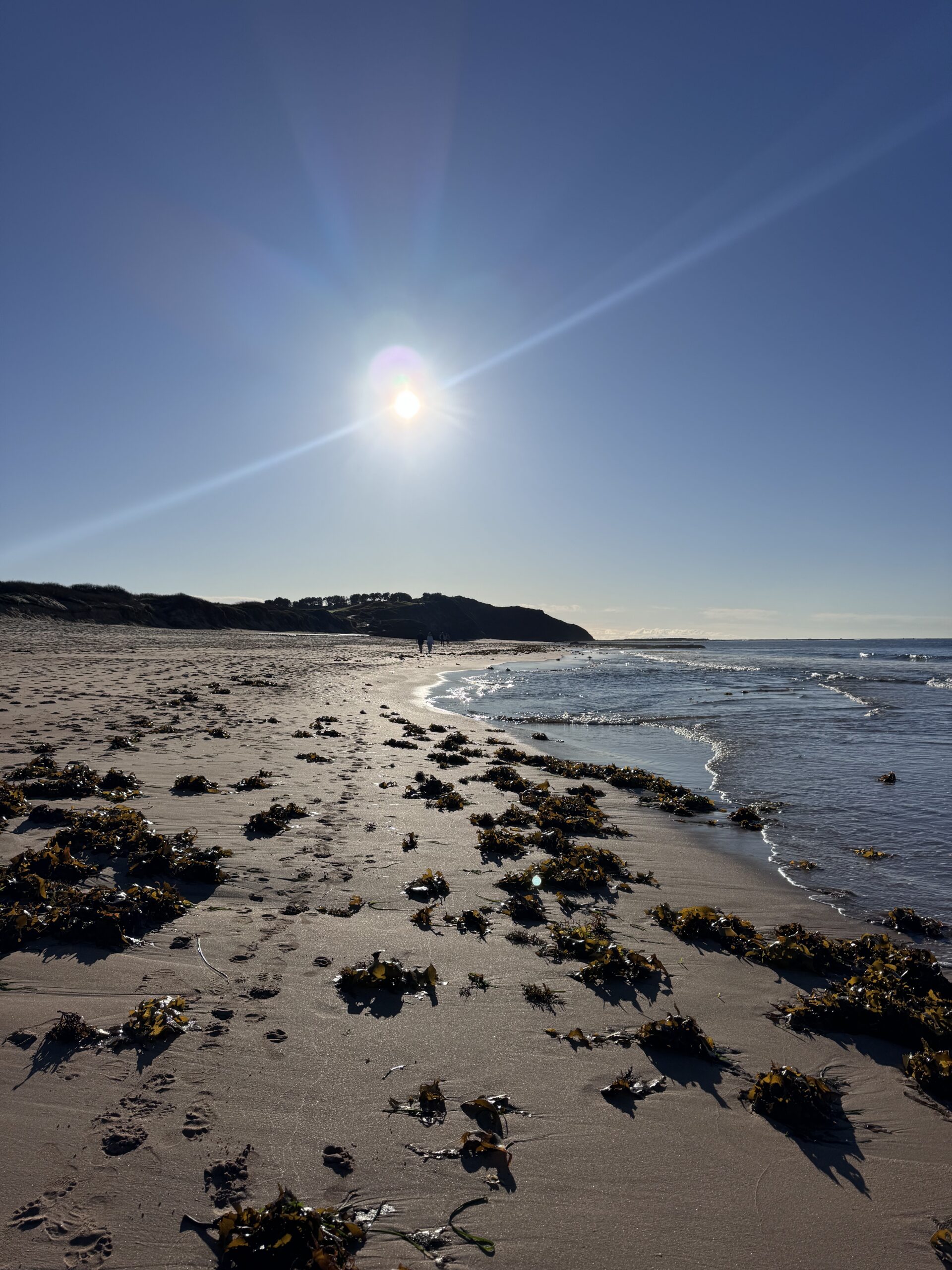
If you’ve felt that odd tug to hold a photograph again—the weight, the soft tooth of matte paper—you’re not alone. The printed photography resurgence is quietly unfolding along our coastline at dawn, far from galleries and Instagram. Photographers are slipping back to the tangible print because it changes how we see, select and share images. Let me show you the little-known Sydney spots where this shift is taking root, how locals turn ocean light into wall-worthy prints, and the simple gear moves that help your stories live off-screen.
Why the printed photography resurgence is happening now
Digital screens flatten our sense of time. Prints, however, slow us down. When you plan a photo for paper, you compose differently. You commit. Moreover, you edit for light and texture rather than brightness and punch. Consequently, images breathe.
There’s also the ritual: soft-proofing, test strips, trimming borders. In addition, more print labs now offer eco papers and pigment inks with long archival life. As a result, photographers trust prints again for honest colour and deep blacks. Above all, a framed print on a wall invites conversation in a way a Story never can.
Hidden seaside “darkrooms”: dawn spots locals use to think in print
Before the city wakes, a handful of coastal pockets set the stage for deliberate, printable frames. These are not the famous lookouts you’ve seen a hundred times. They’re places where the wind drops, spray hangs low and the light wraps rather than blasts.
South Curly’s quiet ledges, Northern Beaches
Skip the main car park and walk south from North Curl Curl rock pool. You’ll find low ledges where swell rebounds into lacey spray. On overcast mornings, the light turns porcelain. Prints love this softness because tones separate without harsh contrast.
- Settings to try: 1/4–1 sec with a 3-stop ND; ISO 100; f/8–f/11 for edge-to-edge detail.
- Composition idea: Anchor a dark basalt seam bottom-left; let the foam arc into the mid-ground. Leave a clean top third for breathing room in print.
- Safety: Swell can sneak. Face the ocean between exposures and keep knees bent for balance.
Queenscliff’s shadow pocket under the promenade
Just north of Manly, early shade lingers under the promenade. When first sun hits spray, you’ll see micro rainbows in backlight. Printed on lustre paper, those prismatic flecks register as a whisper rather than a shout.
- Settings to try: Backlit mist needs exposure compensation (+0.3 to +0.7 EV); spot meter the mids.
- Lens choice: 50mm or 85mm to avoid perspective squeeze from ultra-wide.
- Composition idea: Layer three planes—dark arch, lit mist, mid-surf. Prints reward those planes.
Freshwater’s sandstone “filigree” at the south corner
At low tide, honeycombed rock reveals tiny catchments that hold sky reflections. On paper, these become delicate highlights that screens often clip. Arrive when the wind is under 10 knots for mirror-still pools.
- Settings to try: Polariser at half rotation to balance glare and colour.
- White balance: Cloudy preset for gentle warmth; fine-tune in print soft-proofing.
Dee Why’s post-storm kelp lines
After southerlies, long ribbons of bull kelp curl along the high-tide mark. Their matte, olive surfaces print beautifully. Meanwhile, the sand’s subtle ripples add a mid-tone field for texture-forward prints.
- Settings to try: f/5.6–f/8 for shallow-ish depth that isolates a single kelp ribbon.
- Tripod height: Chest-level to flatten perspective, which reads elegantly in frames.
How printing reshapes visual storytelling at the coast
When you shoot for paper, you work in sequences, not singles. For instance, a triptych of tide states—high, slack and ebb—tells time through texture. Similarly, a series of rock tones from wet to dry forms a tonal staircase ideal for a hallway display.
Moreover, printing forces editorial honesty. You pick ten pictures, not ten thousand. Consequently, stories feel authored. A coastal morning becomes four prints: first light, idle swell, wind change, cloud bank. The edit reads like a poem rather than a feed.
Printed photography resurgence: building a coastal print workflow
A portable, reliable workflow makes the difference between good intentions and framed work. Here’s a tight system locals use to get from dawn foam to finished piece.
Field capture: expose for the print
- Histogram: Prioritise a full mid-tone body with gentle shoulder highlights. In print, mid-tones carry mood.
- Bracket lightly: One stop either side for safety, but aim to nail it in-camera to protect micro-contrast.
- ISO discipline: 64–200 to retain smooth tonal gradations on matte stock.
Edit with paper in mind
- Soft-proof: Load ICC profiles from your lab and preview on a calibrated display (120 cd/m², D65, 2.2 gamma).
- Micro-contrast: Use subtle clarity or structure only in mid-tones; prints magnify halos.
- Sharpening: Output sharpen per paper—matte needs a touch more radius (0.8–1.0) at lower amount.
Test strips and borders
- Test strip: 5 cm x full height with three exposure variants. Decide with window light, not desk lamps.
- Borders: 10–20% white border gives breathing room and easier matting without cropping into content.
Secret “paper-matched” subjects most tourists miss
The best printable subjects aren’t always the loudest waves or reddest skies. They’re the in-between moments with gentle tonality and shape.
- Sea spray back-glow at civil dawn: Thirty minutes before sunrise, mist becomes a silver veil that looks sublime on baryta paper.
- Barnacle negative space: Look for dark ellipses around clusters; print on matte to emphasise form over shine.
- Quiet headland grasses: Side-lit blades at f/2.8 create painterly bokeh that sings on cotton rag.
- Overcast reflections: Puddles on sandstone at mid-morning, when colour temperature is neutral and repeatable in print.
Paper choices locals whisper about (and why)
Paper is your second lens. Choose it like you’d choose a prime.
Matte cotton rag
Velvety, diffuse and forgiving with skin and sea mist. Ideal for moody coastal greys and delicate greens. It reduces glare in bright living rooms.
Baryta fibre gloss
Classic darkroom look. Deep blacks, crisp micro-contrast—perfect for backlit spray and wet rock detail. However, handle with cotton gloves to avoid bronzing.
Lustre with OBAs (optical brightening agents)
Punchy whites and poppy colour suits sunrise pinks. Consequently, it’s a crowd-pleaser for gifts. On the other hand, longevity can slightly trail OBA-free stocks—check lab specs.
Under-the-radar print labs and community corners
Sydney has a few small labs where techs still talk density and dMax over coffee. They may not shout online, yet they nail colour day in, day out. Ask about paper profiles, test strips and archival inks. A good lab will hand you a loop and let you compare.
To choose confidently, review impartial guidance on print permanence and care. For background on storage and display best practice, see the National Archives of Australia’s preservation advice: naa.gov.au. For broader photography learning opportunities and events that often include print exhibitions or talks, check Tourism Australia’s arts and culture hub. Additionally, if you’re exhibiting or selling, consider guidance on cultural protocols for photographing and presenting coastal places on the Australia Council for the Arts website.
Field kit that prints well: what to pack (and why)
Printed work rewards clean optics and stable capture. You don’t need a cinema rig, just reliable tools.
- Camera: Any modern APS-C or full frame with 24 MP+ for A2 prints. More pixels help with gentle cropping, not just bragging rights.
- Lenses: A 24–70mm for versatility; a 50mm or 85mm prime for tidy geometry and flattering compression.
- Tripod: Carbon legs with a low centre column for rock stability; rubber feet for sandstone.
- Filters: 3-stop and 6-stop NDs; circular polariser with a wide, slim mount to avoid vignetting.
- Colour checker: Shoot one frame per light change; it saves time in soft-proofing.
- Microfibre and blower: Print shows dust. Keep your glass spotless.
Smartphone to framed print: yes, it’s doable
Modern phones can produce beautiful A3 prints if you work within their strengths. Firstly, shoot in ProRAW or equivalent. Secondly, expose for highlights—especially in backlit mist—and raise mids gently later. Furthermore, stabilise against railings or your bag for 1/10 sec exposures with computational stacking off.
- Settings: 0.5–1.0 EV under; ISO 50–100; 24–28mm equivalent lens for edge sharpness.
- Composition: Leave clean borders around key elements so the lab can trim without clipping.
- Noise: Use gentle luminance noise reduction only in shadows; keep texture in the mids for paper.
Composing for the frame, not the feed
Think with the mat board in mind. Vertical prints suit narrow wall gaps; horizontals love mantels. Therefore, plan aspect ratios early.
- 2:3 for dynamic surf lines; 4:5 for stately rock forms; 1:1 for tidepools and abstracts.
- Eye travel: Create a curve or diagonal that begins bottom corner and resolves one-third from the opposite edge.
- Whitespace strategy: Place calm water or sky near a border so the eye rests—critical in larger prints.
Light and weather: print-friendly conditions many skip
Everyone chases crimson skies. Locals hunt subtext. Consider these “quiet” windows that make lush prints.
- High overcast after rain: Saturated rock hues, even light, minimal glare.
- Sea fog mornings: Reduced contrast means subtle tonal steps that translate beautifully on matte stocks.
- First southerly buster: Texture in chop, scudding cloud; shoot at 1/125–1/250 to freeze riffles for tactile grain in print.
A coastal sequence you can print this weekend
Here’s a four-frame brief that moves cleanly from beach to wall.
- Pre-dawn negative space: A single kelp ribbon on dark sand; 50mm; f/4; +0.3 EV.
- Edge shimmer: Backlit spray at 1/500; polariser dialled to half; crop for a slim panoramic.
- Textural mid: Barnacle field with raking light; f/11; tripod; micro-contrast low.
- Quiet close: A tidepool reflection at 1/4 sec with ND; soft-proof for matte.
Arrange them left to right as time unfolds. Print on cotton rag with a consistent 15% border for cohesion.
Framing, hanging and care—because longevity is part of the story
Even the best print fails under harsh display. Consequently, invest in simple, archival framing.
- Mat board: Acid-free, off-white to avoid glare; 6–8 cm width for A3 prints.
- Glazing: UV acrylic for beach houses; it’s lighter and safer than glass.
- Hanging: Avoid direct afternoon sun; leave 10 cm breathing room from ceiling lines.
- Care: Dust with a soft brush; never spray cleaner directly on glazing—mist a cloth instead.
Little etiquette locals value on the rock shelf
These spots feel secret because they’re respected. Keep them that way.
- Tread lightly on algae and seagrass; they’re nurseries for micro-life.
- Give anglers priority on ledges; they were there at darker o’clock than you.
- Observe swell surges; never turn your back on the ocean between frames.
- If photographing people, ask first—printed work travels further than a Story.
How a Zipli car-share makes print-focused mornings easier
Print-ready shoots mean tripods, filters, backup layers and a flat storage box for fresh prints from the lab. A Zipli car lets you load the lot without juggling on a bus. Moreover, early coastal starts are simpler when you can pick up a car near home and park close to rock shelves.
On longer runs—say, bouncing between Freshwater, Curl Curl and Dee Why before breakfast—you can keep wet boots and gear contained, then return the vehicle when the light’s gone. It’s a low-fuss way to move like a local and protect your kit.
Advanced print tweaks that separate good from gallery-ready
Once you’re comfortable, refine with these subtle moves.
- Split toning for paper: Cool the shadows by 2–3 points, warm the highlights by 1–2 for depth that suits coastal greys.
- Selective dodge/burn: Feathered 5–8% brushes to guide eye travel along a foam curve.
- Edge control: Lift corners by 1–2% to prevent vignettes closing in when matted.
- Grain for cohesion: Add a mild, tight grain to blend computational sharpness across a series.
Where to learn and exhibit quietly
Look for small library spaces and community centres along the beaches that host pop-up print hangs. They’re often free, and foot traffic includes locals who actually live with the ocean. Meanwhile, regional arts festivals frequently reserve a wall for emerging coastal printmakers. Keep editions small, price accessibly and include a short story card beside each frame.
Checklist: from shoreline to wall in one week
- Plan two dawns with complementary tides and weather.
- Shoot with test strips in mind; note exposure and light notes on your phone.
- Edit for mid-tones; soft-proof with your chosen paper profile.
- Order one small proof per image; adjust; place final order.
- Frame with consistent mats; hang out of direct sun; share the story with your household.
Common pitfalls when moving from screen to paper
- Over-saturation: Coastal hues look plastic in print when pushed. Dial back 10–15%.
- Crushed shadows: Lift by 5–10 points so baryta blacks still hold detail.
- Over-sharpening: Halos scream on matte. Use a lower amount, slightly higher radius.
- Mixed aspect ratios in a series: Plan ratios upfront to avoid awkward framing later.
Reading the coast like a printer: micro-signs that reward patience
The best printmakers are good listeners. Listen to wind drop-offs, the hush between sets, and the texture shift when clouds thin. Notice when gulls settle on the pool rails—that’s your cue for calmer water and cleaner reflections. Similarly, after a tide turn, wet rock begins to matte; specular highlights soften into printable tones.
Budget-friendly ways to start printing today
- Begin with A4 test runs on lustre; learn how your edits translate.
- Print contact sheets of a series; mark favourites by hand.
- Buy frames during mid-season sales; standard sizes save custom costs.
- Swap prints with a friend for fresh eyes and honest critique.
When the printed photography resurgence meets family life
A small coastal series above a kitchen bench turns breakfast into memory-making. Kids point to the “foamy one” or the “pink cloud day.” In turn, you begin to shoot for home, not algorithms. The ocean becomes part of the house, and the house becomes part of your story.
Printed photography resurgence: FAQs most people whisper, not post
Will my phone shots really hold up at A2?
Sometimes. If the file is clean, well-exposed and not heavily cropped, A2 can work. However, start with A3 and evaluate texture.
Do I need a dedicated printer?
Not at first. A good lab, accurate profiles and test strips beat a dusty home printer every time.
Gloss or matte for coastal work?
Both. Gloss for shimmer and definition; matte for mood and subtlety. Build a series that leverages each.
Wrapping Up
This quiet return to paper isn’t nostalgia—it’s craft. The printed photography resurgence gives coastal images a second life off-screen, where texture, tone and time breathe. Start small: one dawn on a quiet ledge, one thoughtful edit, one proof, one frame. Then repeat. Before long, your walls will tell the story your feed never could.
If you need an extra pair of hands on wheels, grab a Zipli car. Load your tripod, paper samples and boots, slip out before first light, and move along the headlands like a local. Your future favourite prints are waiting in that pale, salt-tinged air—ready to be held, not just scrolled.

Chris Evans
Photography & Coastal Stories Writer
Photography guides and visual stories inspired by Australia’s coastline.
 ELECTRIC
 ELECTRIC
 ECO HATCH
 ECO HATCH
 LUXURY
Save on Your Next Rental!
Premium car sharing on Sydney’s Northern Beaches

Leave a Reply